
Membrane protection first
Peninsula water carries chloramine, which wears down RO membranes. We always put catalytic carbon ahead of the membrane so it lasts as it should.
We'll tell you when you don't need a softener · (650) 727-9630
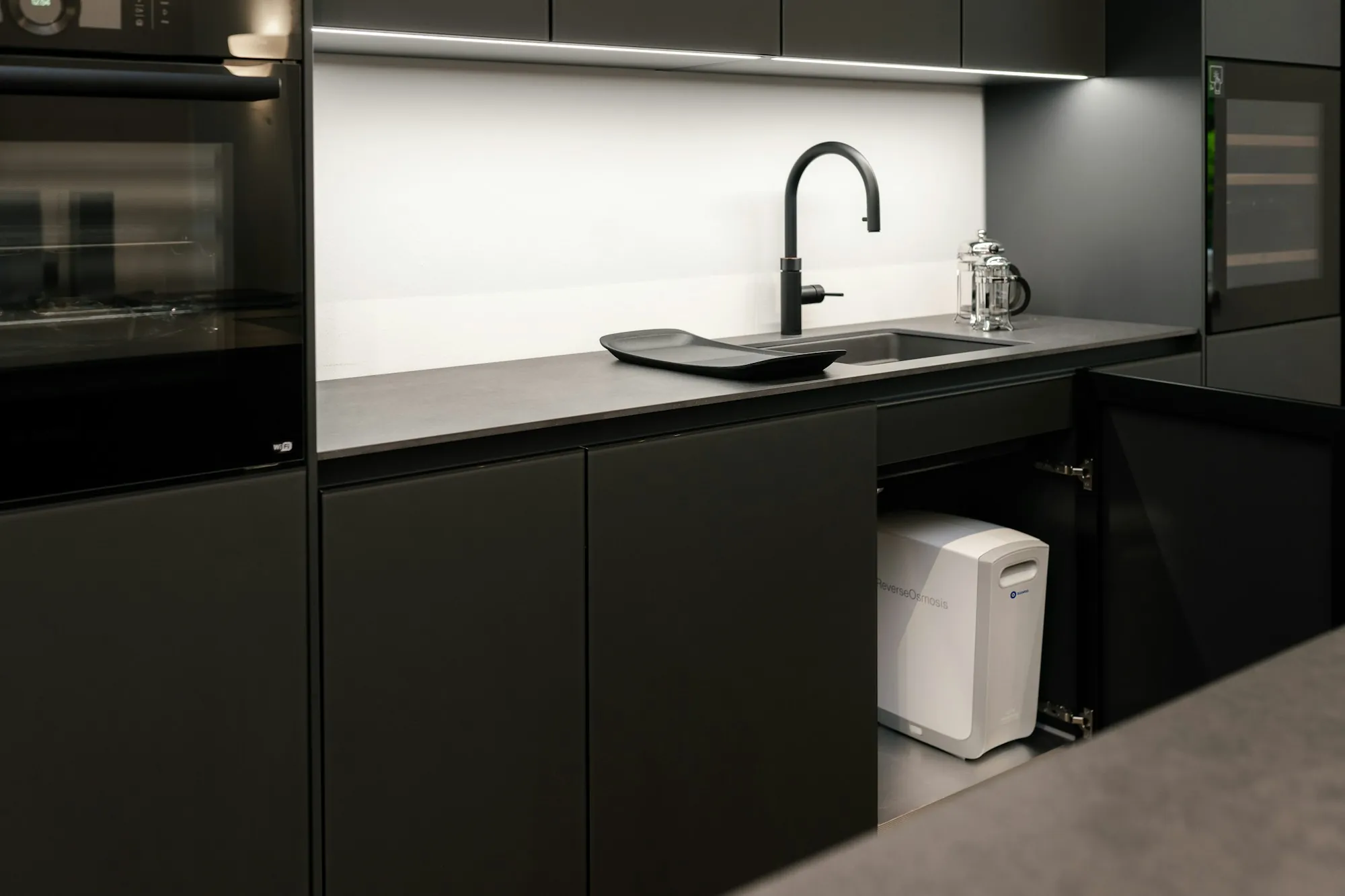
Multi-stage drinking water
Low-TDS drinking water from a dedicated faucet, fitted under your kitchen sink. We put in RO systems across San Mateo, from homes near Hillsdale Boulevard to the older blocks closer to downtown.
San Mateo Water Filtration fits reverse osmosis systems in San Mateo for people who want the cleanest practical drinking water from the tap. The Cal Water supply is good to start with, but chloramine gives it a taste, and houses built before 1986 may have lead solder in the lines.
RO pushes water through a fine membrane after sediment and carbon stages, so dissolved solids and many contaminants stay behind. The visit is one appointment: we take a reading, mount the system under the sink, and show you the numbers after.
A good RO system is more than a membrane. Each stage has a job to do.
We measure TDS and chloramine at the kitchen faucet. That number is the baseline we compare against later.
A sediment cartridge catches rust and grit first. Older galvanized lines in neighborhoods like Beresford and Sunnybrae make this stage earn its keep.
Chloramine damages thin-film RO membranes over time. A catalytic carbon stage ahead of the membrane removes it and protects the part that matters most.
The membrane reduces dissolved solids, many metals including lead, and a long list of other contaminants. It is the heart of the system.
A pressurized tank holds a ready supply so the faucet flows at a usable rate. It sits beside the unit in the cabinet.
A final carbon stage cleans up taste as water leaves the tank. Some households add a remineralization stage for a rounder taste.
We mount a separate drinking-water faucet on the sink deck or countertop. If there is no spare hole, we drill one cleanly.
Reject water goes to the drain through a proper saddle connection. Every joint is checked before we close the cabinet.
If you want RO water at the fridge, we can run a line to it. We plan the route so the tubing stays out of sight.
You get a written schedule for the pre-filters and the membrane. Most changes are simple twist-off swaps.
We take a TDS and chloramine reading at the kitchen faucet. Then we check cabinet space, the drain, and where the new faucet will go. You get a written quote before anything is fitted. Expect around twenty minutes.
We mount the stages and tank, tap into the cold line and drain, and fit the faucet. You will see a neat row of cartridges and a small tank in the cabinet. The tank fills slowly the first time, so we flush the system while we finish up. Plan on one visit of a couple of hours.
Once the tank fills, we take another TDS reading at the new faucet. You see the drop side by side with the first number. We show you where each cartridge sits and how to change it.
Peninsula water carries chloramine, which wears down RO membranes. We always put catalytic carbon ahead of the membrane so it lasts as it should.
The TDS meter comes out before and after. You'll know what's in the glass instead of taking our word for it.
Lines are cut to length and clipped, not left in loops. You still have room under the sink for the trash bin and the cleaning spray.
One appointment gets you a reading, a written quote, and a working RO faucet. Pick a time that suits your week, and we show up when we said we would.